
Worship Wingman - Service Flow Diagnostic Course

- Description
- Curriculum
- Grade
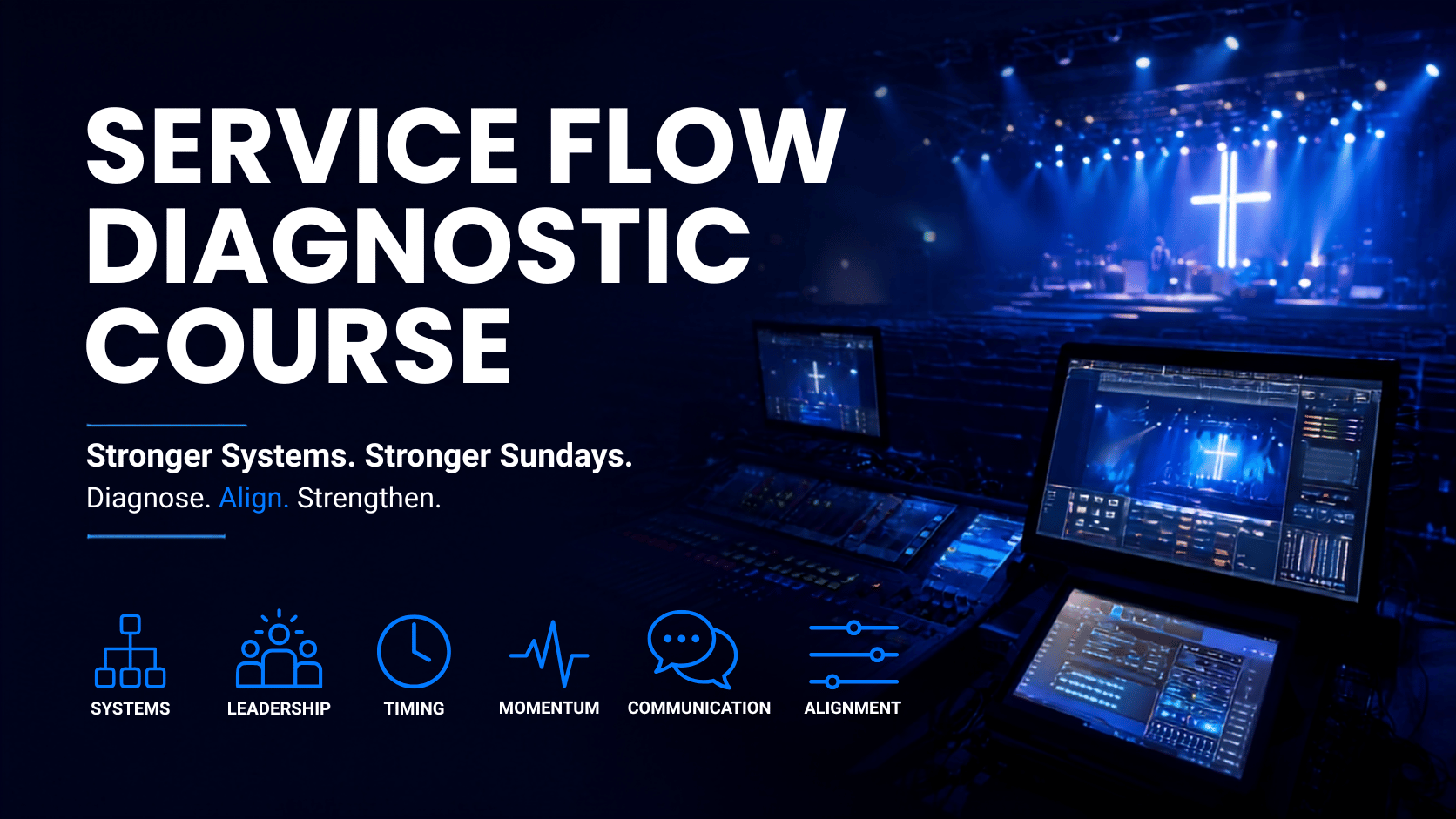
Most Sunday problems are not passion problems — they are system problems.
The Service Flow Diagnostic Course helps church leaders identify what is quietly creating confusion, stress, weak transitions, momentum loss, and team misalignment in their Sunday services.
This course gives leaders a practical way to look beneath the surface of their Sunday experience and understand what is actually shaping the room.
Inside the course, participants will learn how to:
- See Sunday services as connected systems, not isolated moments
- Map the current order and flow of the service
- Clarify who leads what during each part of Sunday
- Identify timing issues that create stress or weaken engagement
- Recognize the top momentum killers in a service
- Spot where energy drops and distractions increase
- Strengthen transitions between worship, announcements, sermon, and response moments
- Improve communication between leaders, worship teams, tech teams, and platform teams
- Diagnose where worship and tech are misaligned
- Build clearer systems that help volunteers serve with more confidence
Through short teaching sessions, real ministry examples, worksheets, audits, and scenario-based activities, leaders will move from guessing what feels off to clearly seeing what needs to be strengthened.
The goal is simple: clearer systems, stronger flow, healthier teams, and Sunday services that carry momentum with greater confidence, unity, and peace.
-
2
 How Sunday Services Actually Function
 -
3
 Symptom vs Structure QuizThis quiz will help you recognize how recurring service issues are often rooted in structure, not just momentary mistakes.
 -
4
Why Good Churches Still Have Messy Services
Here you will learn why even healthy, sincere, and Spirit-led churches can still experience messy services when structure, communication, and preparation are weak. We will explore how heart and systems work together, why training and a clear order of service matter, and how better preparation can create more peace, clarity, and confidence in the flow of your services.
-
5
The Hidden Cost of Disorganized Sundays
-
6
 The Sunday Service Systems Diagnostic Tool
Here is a practical diagnostic tool designed to help church leaders evaluate the hidden structural issues affecting their Sunday services. By assessing areas like transitions, communication, leadership clarity, and team coordination, leaders can identify recurring breakdowns, trace them back to their root causes, and begin building clearer, healthier, and more intentional service systems.
-
7
Why You Must Write Down Your Flow
Here you will learn why it is essential to write down your service flow if you want to improve it. We will explore how making the flow visible helps clarify roles, strengthen timing, smooth out transitions, reduce guesswork, and create a more intentional, confident, and effective Sunday service.
-
8
Full Sunday Flow Mapping Exercise
Most churches operate their Sunday services from memory, assumptions, or verbal communication. Over time, this creates confusion, weak transitions, leadership tension, and inconsistent experiences.
In this activity, you will map out your entire Sunday service flow from beginning to end. By putting the full structure on paper, you’ll begin to identify hidden gaps, unclear transitions, leadership overlap, and areas where assumptions have replaced clarity.
This exercise is designed to help you see your current system clearly so you can begin strengthening it intentionally.
-
9
Identifying Who Leads What
Here you will learn why clearly identifying who leads what in every segment of your service is essential for reducing confusion and strengthening the flow of Sunday. We will explore how defined leadership roles, clear transitions, simple cues, and better communication help create more confidence, more peace, and a smoother service experience for both your teams and your congregation.
-
10
Service Flow Leadership AuditThis leadership clarity audit quiz will help you identify areas in your Sunday service where unclear roles, weak transitions, and undefined leadership responsibilities may be creating confusion or disrupting momentum. Through multiple choice, matching, true/false, and scenario-based questions, you’ll evaluate how clearly leadership ownership is communicated throughout your service flow.
-
11
Timing Your Service Segments
Here you will learn why timing your service segments is an essential part of healthy service flow. We will explore how time reveals your priorities, how segments that are too long or too rushed can affect attention, energy, and momentum, and how greater intentionality and balance can help you steward your service with more wisdom and effectiveness.
-
12
Timing Audit Worksheet Activity
-
13
Seeing the Gaps in Your Flow
Here you will learn how to identify the hidden gaps in your service flow that quietly create confusion, weaken momentum, and distract from what God is doing in the room. We will explore how to spot unclear leadership moments, abrupt transitions, timing issues, and technical breakdowns so you can begin strengthening the parts of your service that need greater clarity, training, and intentionality.
-
14
What Momentum Feels Like in a Service
Here you will learn what real momentum in a church service actually feels like and why it is so important to recognize it before trying to fix what weakens it. We will explore how momentum is not hype, volume, or emotional manipulation, but rather sustained engagement, clarity, unity, and spiritual attentiveness that help the room move together with purpose.
-
15
The Top 5 Momentum Killers in Church Services
Here you will learn the top five momentum killers that most often disrupt church services and weaken the flow of the room. We will explore how dead air, unclear leadership, long announcements, tech delays, and emotional whiplash quietly break engagement, and how greater clarity, preparation, and intentional transitions can help protect and strengthen momentum throughout your service.
-
16
The Top 5 Momentum Killers: True or FalseBy completing this activity, participants will strengthen their understanding of the common momentum killers that disrupt service flow and weaken engagement. They will become more aware of how small breakdowns in preparation, communication, timing, and leadership clarity can impact the atmosphere, confidence, and momentum of a church service.
-
17
Spotting Energy Drops in Real Time
Here you will learn how to recognize energy drops in a service while they are happening and how to evaluate them afterward with greater clarity. We will explore how to watch the room, review your service recordings, identify signs of lost engagement, and use healthy evaluation to uncover patterns that can help strengthen your service flow over time.
-
18
Protecting and Rebuilding Momentum
Here you will learn how to protect momentum when it is strong and how to rebuild it when it begins to weaken during a service. We will explore practical ways to use a clear bridge, supportive atmosphere, shorter and more focused segments, and active re-engagement so leaders can respond with greater awareness, clarity, and confidence in real time.
-
19
Rebuilding Momentum Under PressureThis scenario-based activity will help you identify how leadership responses, communication, and preparation affect momentum during a church service. Through realistic service situations, you will evaluate the strongest ways to protect and rebuild momentum when disruptions or awkward moments happen.
-
20
Why Transitions Matter More Than Songs
Here you will learn why transitions often matter more than the songs themselves when it comes to protecting the flow of a service. We will explore how transitions help set tone, redirect attention, preserve atmosphere, and carry people into the next moment with greater clarity, so that what is built in worship is not lost in the spaces in between.
-
21
Scenario Activity: Spot the Transition BreakdownThis activity will help you identify how and where transitions break down in a service. By working through real scenarios, you will learn to recognize the structural issues behind awkward moments and understand how transitions impact momentum, tone, and engagement.
-
22
The 3 Most Common Transition Failures
Here you will learn the three most common transition failures that break momentum in church services and how to begin strengthening them. We will explore why the movements from worship to announcements, announcements to the sermon, and sermon to response are so vulnerable, and how better bridges, clearer tone alignment, and stronger planning can help preserve peace, clarity, and engagement in the room.
-
23
Transition Mapping Exercise
Here you will learn how to map every handoff in your service so transitions become clearer, smoother, and more intentional. We will explore the three key questions behind every strong handoff—who ends the segment, who begins the next one, and what bridges them—so you can reduce hesitation, protect momentum, and build the kind of invisible excellence that strengthens the entire service.
-
24
Map and Diagnose Your Transitions
Map your real service flow, identify your weakest transition, and diagnose its structural cause using the example as your guide.
-
25
Rehearsing Transitions, Not Just Songs
Here you will learn why churches must rehearse transitions, not just songs, if they want smoother and more effective services. We will explore how practicing key handoffs, aligning tone, involving tech and media, and adding intentional transition rehearsal to your normal rhythm can reduce hesitation, strengthen unity, and help eliminate many of the awkward moments that weaken Sundays.
-
26
Activity: Rehearsal Redesign Challenge
Use the Rehearsal Redesign form to assess how your team currently rehearses and identify one change that will improve how transitions are practiced and executed.
-
27
5.1 Why Worship & Tech Must Be One Team
Here you will learn why worship and tech cannot function as separate departments if a church wants healthy, unified services. We will explore how misalignment creates tension, how stronger communication and shared planning build peace, and why unity between the stage and the booth is essential for creating a smoother, more effective ministry environment.
-
28
5.2 The Communication Gaps That Hurt Sundays
Here you will learn how the most common communication gaps quietly create stress and confusion in Sunday services long before the service begins. We will explore how last-minute changes, the lack of a shared service plan, and unclear cue communication weaken preparation, and how better planning, earlier deadlines, and stronger rehearsal can help create more peace and clarity on Sundays.
-
29
5.3 The Alignment Audit
Here you will learn how to assess the real health of the relationship between worship and tech through an honest alignment audit. We will explore the key questions that reveal where alignment is weak, how stronger rehearsal, clearer cues, shared service plans, and healthy feedback can strengthen unity, and why proactive alignment creates more peace in the room.
-
30
Activity: The Alignment Audit
-
31
5.4 Building a Unified Sunday Execution Plan
Here you will learn how to bring all the pieces of service flow together into a unified Sunday execution plan that your whole team can follow. We will explore how one clear service plan, a focused pre-service huddle, and defined cue language can help align your leaders, strengthen your volunteers, and create Sundays that feel more calm, clear, and coordinated.
-
32
6.1 Why Focus Beats Fixing Everything
Here you will learn why trying to fix everything at once usually slows progress instead of helping it. We will explore how greater focus, better prioritization, and small but strategic improvements can create real traction, build team confidence, and help your church strengthen the areas that will make the biggest difference first.
-
33
6.2 Choosing the Right 3 Goals
Here you will learn how to choose the right three goals for the next ninety days so your church can improve with greater focus and less overwhelm. We will explore why three goals are often the most realistic and effective, how to make them more specific and measurable, and why small, consistent structural improvements are what ultimately create lasting change in church culture.
-
34
6.3 Building a Simple 90-Day Implementation Plan
Here you will learn how to turn your goals into a simple 90-day implementation plan that your church can actually follow. We will explore how to assign clear ownership, break the process into a monthly focus, create healthy weekly checkpoints, and build the kind of intentional structure that helps real progress move from ideas into action.
-
35
 Activity: Download and Complete Your 90-Day Implementation Plan
In this lesson, you will turn your service flow diagnosis into a practical 90-day implementation plan. You will choose three focused goals, assign ownership, create weekly check-ins, and break the plan into monthly phases so your team can build clearer, healthier, and more unified Sunday services without trying to fix everything at once.
-
36
6.4 Measuring Growth Without Losing Vision
Here you will learn how to evaluate your church’s growth in a healthy way without becoming overly critical or losing sight of the bigger vision. We will explore how to measure whether things are becoming clearer, less stressful, and more unified, how to use a simple debrief after each Sunday, and why healthy evaluation should always combine correction, encouragement, and long-term stewardship.
-
37
Conclusion Activity: Build the Stronger Service Flow Path